


































Online and brick-and-mortar stores need effective inventory control in today’s fast-moving business. Knowing how to improve your inventory management and keeping effective track of your stock is essential for running an online company, a physical store, or both.
This article acts as a guide that lays down the challenges of stock control with practical solutions, including the possibility of partnering with an outsourcing partner like Big Outsource.
Importance of Stock Control
Knowing what is in your warehouse is not enough to achieve effective stock control. You also need to make sure that the right products are available when customers need them. This activity is important so your business will run more smoothly and make your customers happier.
On the other hand, if stocks are mishandled, it can result in many problems, such as stockouts, overstocking, and unwarranted increases in operating expenses.
Professional stock control is crucial for anyone looking to maintain their competitive edge, from small-business owners operating online to high-ranking executives such as chief operating officers, e-commerce directors, and retail managers of large retail chains.
Common Inventory Challenges
Retailers of all sizes often struggle with stock management. These issues can affect company productivity, profitability, and customer pleasure. Stock control issues most often involve:

Incorrect inventory data
Inventory data errors are common and can create large stock differences. Inventory tracking problems make it difficult to fulfill client orders efficiently, causing delays or errors. This issue is commonly caused by manual data entry errors or fragmented systems that don’t sync inventory updates. Thus, shops may have too much or too little stock, which might hurt their business.
Overstock and stockouts
Maintaining a balanced inventory is always difficult for businesses. Overstocking requires cash and storage space, which increases holding costs and waste, especially for perishables. But stockouts—when things are unavailable when customers want them—lead to missed sales, unhappy customers, and maybe lost business. Retailers must balance stocking enough to meet demand without overstocking.
Complex supply chains
The complexity of global supply lines complicates stock control. Retailers face delays, disruptions, and lead times that might affect inventory inventories. Stockouts can result from supplier delays, and natural disasters and geopolitical events can hamper inventory management. Managing these complications requires detailed planning and coordination throughout the supply chain.
Poor channel integration
Retailers with online businesses, physical locations, and third-party markets need consistent and reliable stock information. However, many retailers struggle to integrate inventory systems across channels, resulting in inconsistent data. Inconsistency could lead a product to be available in one channel but be out of stock in another. This is frustrating to customers and personnel. Lack of integration might also affect stock management and order fulfillment.
Streamline Operations by Optimizing Inventory
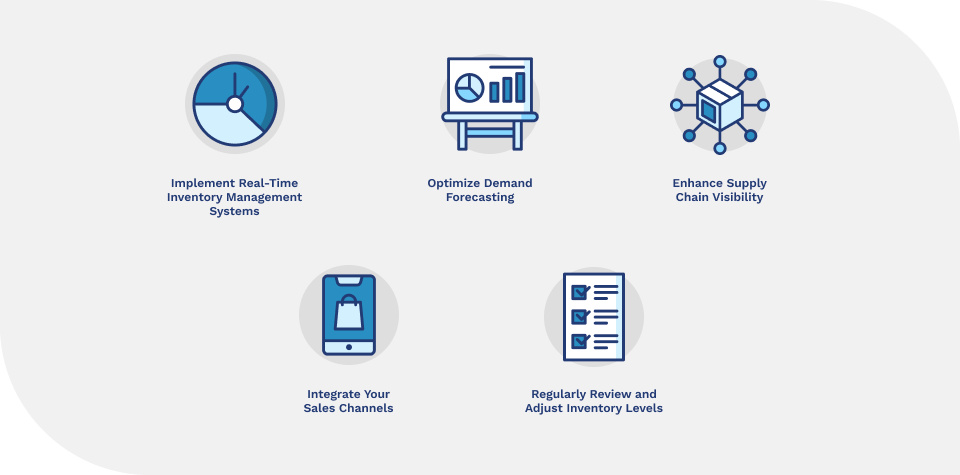
To address these stock control issues, retailers can enhance inventory management through these methods:
Use of real-time inventory systems
Modern retailers need real-time inventory management. These systems give real-time stock levels across all sales channels, preventing overstocking and stockouts. Retailers can view their stock using a single dashboard or interface that integrates inventory data from all channels. This improves accuracy, decision-making, and fulfillment, improving customer happiness and operational efficiency.
Improve demand forecasting
Maintaining adequate stock levels requires accurate demand forecasts. Retailers can forecast demand and modify inventory by examining previous sales data, market trends, and seasonal swings. Advanced analytics systems can automate demand forecasts, improving accuracy and lowering the risk of overstocking or running out of popular items. This proactive approach helps shops adapt to consumer behavior and market situations.
Increase supply chain visibility
Effective stock control requires supply chain visibility. Retailers may better understand the supply chain from production to delivery by working with suppliers and using RFID tags, IoT devices, and blockchain. This greater visibility improves lead time estimations, supplier collaboration, and stock management. With a better understanding of the supply chain, retailers can reduce the risk of delays and disruptions, which leads to more consistent inventory movement.
Sales channel integration
By using unified commerce, all sales channels are connected, and you can be sure that all of your inventory data is correct and consistent. It increases stock accuracy and customer experience by providing up-to-date product availability across sales channels. Customers checking product availability online should see the same information as store associates checking inventories in-store. Inventory management is simplified via integration, making order fulfillment faster and less error-prone.
Regular checking and adjusting of inventory
Stock control needs continual monitoring and adjustment. Retailers should regularly analyze inventory performance parameters like stock turnover, SKU profitability, and demand patterns to ensure stock levels match demand.
Businesses should be ready to increase stock for high-demand items or decrease supply for slow-movers. Regular assessments optimize inventory levels, reduce excess stock, and allow quick market response.
In summary, effective stock control is a cornerstone of successful retail operations. By addressing common challenges and leveraging modern technology, retailers can optimize their inventory management processes, leading to increased efficiency, reduced costs, and improved customer satisfaction.
For retailers looking to improve their stock control, now is the time to invest in the right strategies and tools to stay ahead of the competition. One such strategy is outsourcing.
Outsourcing Inventory Control: A Strategic Advantage for Retailers
Outsourcing stock control is a smart way to help retailers improve the efficiency and efficacy of their inventory management systems. Businesses may improve total customer satisfaction by employing specialized skills, advanced technology, and flexible resources.

Outsourcing stock control has the following key benefits:
- Access to specialized expertise: Outsourcing gives you access to skilled specialists who can optimize inventories, implement best practices, and decrease waste.
- Data analysis and forecasting: With advanced analytical tools and demand forecasting skills, stock levels may be managed more accurately.
- High-tech integration: Real-time inventory tracking, task automation, and system integration all help to streamline processes and increase productivity.
- Cost-effectiveness: Outsourcing can lower overhead expenses, increase scalability, and eliminate the need for large technology and infrastructure expenditures.
- Improved supply-chain coordination: Outsourcing providers frequently have existing supplier ties, which allows for better bargaining, faster shipping, and lower risk.
- Enhanced customer satisfaction: Efficient stock management results in speedier order fulfillment, fewer stockouts, and a better customer experience.
Elevate Your Retail Operations Through Outsourcing Solutions
Outsourcing your inventory management from Big Outsource, Clutch.co’s #1 Outsourcing Partner for SMEs, will significantly help streamline your processes, cut expenses, and increase overall productivity.
Book a consultation with us today and let us help your retail business grow let us help your retail business grow.